
Navigating the Tariff Landscape: Building Resilient Supply Chains

Introduction: Global Uncertainty, Local Impact
In today’s volatile global marketplace, supply chain disruptions have become increasingly common—especially for medical device and bioprocessing manufacturers that rely on precise, high-quality components. From regional conflicts to shipping bottlenecks and evolving trade policies, global events continue to reshape sourcing strategies and introduce new risks into operations that once felt secure.
One of the most unpredictable variables? Tariffs.
Whether driven by trade disputes, shifting alliances or economic policy changes, tariffs can create unexpected costs, delays and regulatory headaches. For engineering and supply chain teams under pressure to maintain continuity and control costs, these disruptions pose a serious challenge.
Tariffs 101: More Than a Line Item
Tariffs are government-imposed taxes on imported goods, often implemented to protect domestic industries or rebalance trade agreements. But for manufacturers operating in regulated environments like medtech and bioprocessing, the ripple effects of tariffs can be far-reaching.
They can lead to:
- Sudden spikes in component costs
- Customs-related shipment delays
- The need to requalify alternate parts or vendors
- Increased administrative complexity across sourcing and logistics
A 2024 report from the Institute for Supply Management found that 62% of organizations impacted by tariff changes had to alter their procurement strategy within a fiscal year—often at significant cost and complexity.
Shifting the Focus: From Optimization to Resilience
Historically, many supply chains were optimized for cost-efficiency and speed. But in today’s climate, more companies are prioritizing resilience and risk mitigation.
What does that look like in practice?
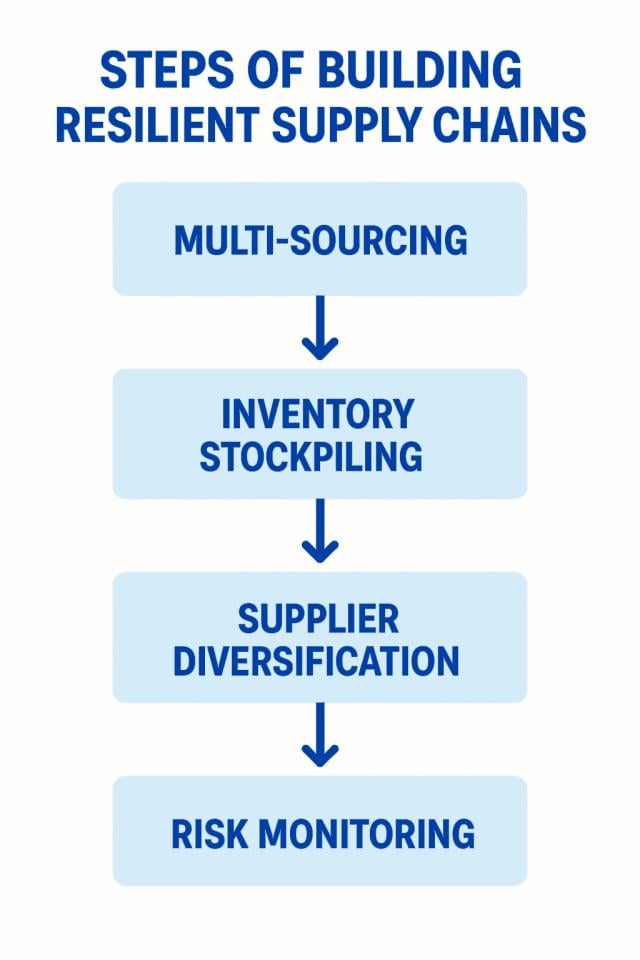
- Multi-sourcing from multiple geographies to mitigate regional risk
- Stocking critical components domestically to avoid shipping
- Building supplier relationships that offer transparency and flexibility
- Tracking geopolitical trends as part of procurement planning
This isn’t just about bracing for impact—it’s about building a supply chain that’s agile, intelligent and built to outlast the next shock—whatever form it takes.
A Multi-Layered Approach to Supply Chain Resilience
Qosina has built its sourcing strategy around flexibility, foresight and customer continuity. That includes:
- Strategic Inventory Depth: We maintain comprehensive safety stock of critical components—even during unexpected surges or delays—so your product timelines stay on track.
- Diversified Supplier Relationships: Our sourcing spans multiple regions, allowing us to pivot quickly in response to tariff changes or shipping constraints—without sacrificing quality or compliance.
- Advanced Risk Assessment: We continuously monitor global trade conditions and implement mitigation strategies before they affect your production.
Tariff Stability, Transparent Pricing
When tariffs fluctuate, uncertainty around cost can derail planning. That’s why Qosina offers:
- Stable pricing structures backed by long-term planning
- Transparent pricing policies that eliminate surprises
- Forecasting support for better supply chain visibility
- Collaborative strategies tailored to your unique sourcing needs
We don’t just respond to change—we plan for it.
Inventory Management as a Strategic Advantage
Qosina’s expertise in inventory planning helps customers maintain cost control and continuity. Our proactive strategy includes:
- Domestic warehousing of high-demand components
- Regular customer inventory reviews and forecasting support
- Long-term availability planning aligned with your production cycles
For many customers, this capability has been a game-changer—especially when market conditions shift quickly.
Qosina’s Commitment: Supply Chain Stability You Can Count On
At Qosina, we’re here to be your steady, reliable partner—providing the stability and planning support you need to stay ahead of supply chain challenges, including tariff uncertainty.
As international trade policies shift, our global footprint and strategic scale allow us to reduce the impact of those disruptions on your operations.
The Right Partner Makes the Difference
You can’t always predict tariff changes. But you can choose a partner who plans for them.
With Qosina, you get more than just a component supplier—you gain a strategic ally invested in your long-term success. From sourcing agility to inventory stability and transparent pricing, we help your team build a resilient, future-ready supply chain.
Speak to your Qosina sales representative about building stability into your component strategy. You can find your rep here!